
Table of Contents
- What Is a Full Kitchen Renovation?
- Kitchen Renovation Cost Ranges in 2026
- Kitchen Renovation Cost Breakdown by Component
- Kitchen Renovation Timeline and Project Duration
- Kitchen Renovation Budget Planner: Creating Your Estimate
- Kitchen Renovation Contingency Budget: Planning for the Unexpected
- Cost-Saving Choices Without Compromising Quality
- Avoiding Hidden Costs and Cost Overruns
- Frequently Asked Questions
Last Updated: October 18, 2026
What Is a Full Kitchen Renovation?
The cost of full kitchen renovation varies based on scope and materials, but understanding what a full kitchen renovation entails, a comprehensive refit that replaces or upgrades most kitchen components: cabinetry, worktops, appliances, flooring, lighting, plumbing, and electrical systems, is essential for budgeting.
The scope typically includes removing existing fixtures, addressing structural or damp issues, installing new cabinetry and worktops, upgrading appliances, rewiring and replumbing where necessary, and finishing with flooring, lighting, and decorative elements.
The distinction matters for budgeting: a partial update, say new worktops and appliances only, costs considerably less than a full renovation. A full renovation, however, lets you reconfigure the layout, improve energy efficiency, and create a space that genuinely works for how you live.
Kitchen Renovation Cost Ranges in 2026
The cost of a full kitchen renovation varies significantly based on the scope, materials, and labour involved. Rather than a single figure, think in terms of tiers: budget, mid-range, and premium. Each tier reflects different choices around cabinetry, finishes, appliances, and the extent of structural or remedial work required.
Budget Kitchen Renovation
A budget-conscious full kitchen renovation focuses on functional, durable materials without premium finishes or bespoke design. It suits homeowners who’ve already purchased kitchen units online and need professional installation and project management, or those seeking a straightforward update without unnecessary extras.
Budget renovations often include ready-made or semi-custom cabinetry, laminate or budget vinyl worktops, standard stainless steel appliances, basic vinyl or ceramic tile flooring, and straightforward lighting.
The timeline is typically shorter, often 4-6 weeks, since there are fewer design complexities and reasonable material lead times. This tier suits those who want a stress-free installation without the premium price tag.
Mid-Range Kitchen Renovation
A mid-range full kitchen renovation balances quality materials, thoughtful design, and reasonable costs. It’s the most common tier for homeowners seeking a lasting, contemporary upgrade without excessive expense.
Mid-range renovations typically include semi-custom or custom cabinetry with quality finishes, engineered stone or solid wood worktops, integrated or premium appliances, porcelain tile or engineered wood flooring, and layered lighting. Moderate remedial work, such as uneven floors, minor structural adjustments, or selective replumbing, is absorbed into the overall project.
The timeline is typically 8-12 weeks, allowing for material selection, delivery, and careful installation. This tier reflects the experience and personal service A B Carpentry & Renovations delivers: comprehensive project management that handles the complexity so you don’t have to.
Premium and Bespoke Kitchen Renovation
A premium or bespoke full kitchen renovation prioritises custom design, high-end materials, and meticulous craftsmanship. It’s ideal for character properties requiring specialist joinery, those seeking a truly unique space, or those for whom quality and longevity are paramount.
Premium renovations include bespoke cabinetry designed to fit your space and lifestyle, natural stone or premium engineered worktops, luxury appliances, real hardwood or natural stone flooring, and sophisticated lighting.
The timeline is typically 12-16 weeks or longer, reflecting the custom design process, material sourcing, and care required for bespoke joinery and installation.
Kitchen Renovation Cost Breakdown by Component
Understanding where your budget goes helps you decide where to invest and where to economise. The cost of full kitchen renovation breaks down across several key components: cabinetry, worktops, appliances, plumbing and electrical work, flooring, lighting, and labour.
Cabinetry and Worktops
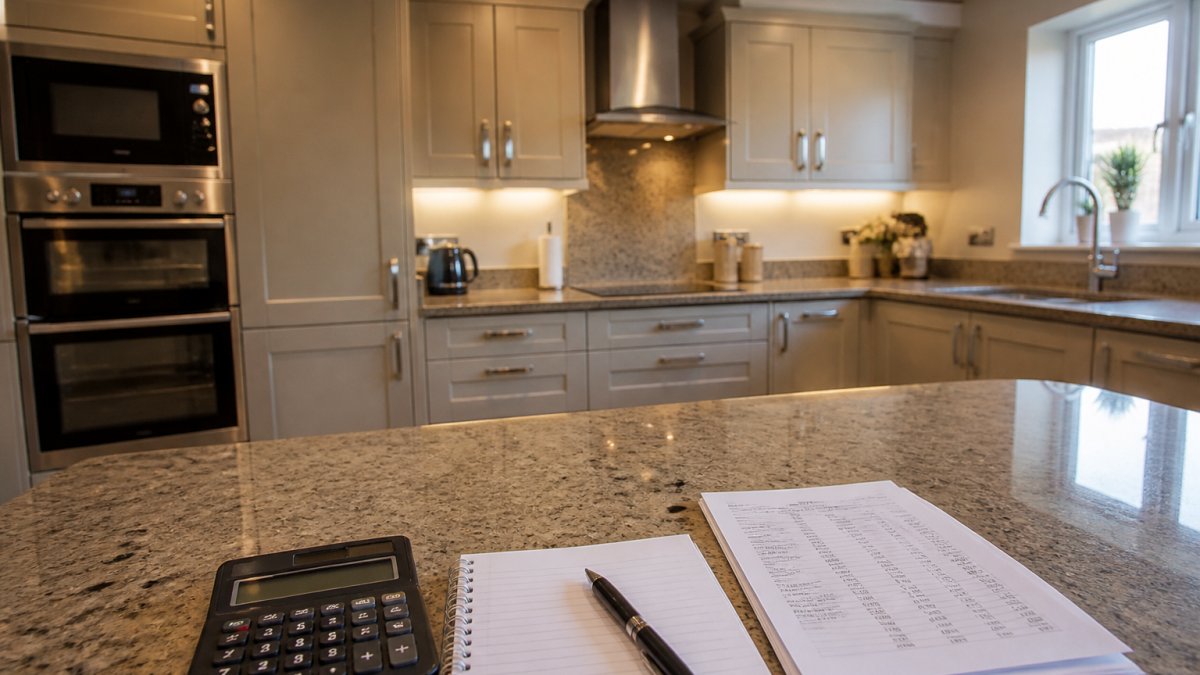
Cabinetry typically represents 25-35% of your total renovation budget, the single largest component. The choice between ready-made units, semi-custom cabinetry, and bespoke joinery dramatically affects both cost and fit. Ready-made units are the most economical; bespoke cabinetry, built to your exact layout, commands a premium but offers unmatched fit and functionality.
Worktops account for another 10-15% of budget. Laminate is the most affordable; engineered stone and solid wood sit mid-range; natural stone (granite, marble, quartz) and premium materials cost more. Installation and any structural adjustments needed to support them also factor into the final expense.
Appliances
Appliances typically account for 15-20% of renovation costs. Standard stainless steel built-in appliances (cooker, fridge, dishwasher) sit at the budget end; integrated appliances with premium features and finishes cost more. If you’ve already purchased your own appliances, this reduces your renovation cost significantly, A B Carpentry & Renovations can install customer-supplied units, which many homeowners choose to stretch their budget further.
Plumbing, Electrical, and Structural Work
Plumbing and electrical work typically represent 15-20% of total costs. Relocating water supply lines, drainage, or gas connections increases expense, and older properties with legacy plumbing or wiring add to the bill when upgrading to modern standards. Structural work, levelling uneven floors, addressing damp, or reinforcing walls, is often necessary in character properties but varies widely depending on what’s found during initial assessment.
Flooring, Lighting, and Finishes
Flooring typically accounts for 8-12% of budget: vinyl or ceramic tiles are economical, while porcelain tiles, engineered wood, or natural stone cost more. Lighting, often overlooked, represents 3-5% but dramatically affects function and ambiance. Finishes such as paint, splashbacks, and decorative elements account for another 3-5%.
Labour and Installation
Labour and installation typically represent 20-30% of total renovation costs, depending on project complexity. This covers skilled tradespeople, project management, site coordination, and fitting everything to a high standard. For complex projects involving structural work, remedial issues, or bespoke joinery, labour costs can be higher, reflecting the expertise required to handle older properties and deliver lasting results.
Kitchen Renovation Timeline and Project Duration
A full kitchen renovation timeline depends on scope, complexity, and material availability. Budget renovations with minimal remedial work typically take 4-6 weeks. Mid-range projects with moderate plumbing or electrical adjustments usually run 8-12 weeks.
The timeline includes design and planning (1-2 weeks), material ordering and delivery (2-4 weeks depending on stock or bespoke items), demolition and remedial work (1-3 weeks), installation of cabinetry, appliances, and fixtures (2-3 weeks), and final finishes and decoration (1-2 weeks).
A B Carpentry & Renovations manages the entire timeline on your behalf, coordinating tradespeople, managing material delivery, and keeping the project on track. This stress-free approach means you’re not chasing multiple contractors or worrying about coordination, we handle it all.
Kitchen Renovation Budget Planner: Creating Your Estimate
Creating a realistic budget requires understanding your priorities and the cost of each component. Start by deciding which tier, budget, mid-range, or premium, aligns with your needs and resources. Then, allocate your budget across components based on what matters most to you.
A simple approach: decide your total budget, then allocate roughly 25-35% to cabinetry and worktops, 15-20% to appliances, 15-20% to plumbing and electrical work, 8-12% to flooring, 3-5% to lighting and finishes, and 20-30% to labour.
Be honest about what you can and cannot do yourself. If you’ve already purchased kitchen units, installation and project management still represent significant value. Managing multiple trades yourself often costs more in coordination and quality control than you’d save by doing it piecemeal.
Request a detailed quote that breaks down costs by component. This transparency helps you spot where money is going and identify areas where you might adjust choices without compromising the final result. A good renovation partner will explain their pricing clearly and answer questions about where costs arise.
Kitchen Renovation Contingency Budget: Planning for the Unexpected
A contingency budget, typically 10-15% of your total renovation cost, is essential for any full kitchen renovation. This buffer covers unexpected costs that almost always emerge once work begins: hidden damp, structural issues discovered during demolition, outdated plumbing or electrical systems requiring replacement, or material price fluctuations.
For older properties, contingency is especially important. A 1920s semi with uneven floors and dodgy walls may reveal issues during initial assessment that weren’t obvious from a surface inspection.
Without a contingency budget, a 10-15% cost overrun can derail your project or force compromises on quality. With one in place, you can handle the unexpected without stress or difficult mid-project choices.
Skipping a contingency budget is a common mistake. Even well-planned renovations encounter unexpected costs. Setting aside 10-15% upfront means you’re prepared rather than scrambling if something goes wrong.
Cost-Saving Choices Without Compromising Quality
Choose cabinetry carefully. Semi-custom cabinetry offers better value than fully bespoke units for most homeowners, delivering good fit and quality without the premium price.
Worktops are visible and heavily used, so quality matters. However, engineered stone or quality laminate delivers excellent durability and appearance at a fraction of natural stone costs.
Appliances represent a significant expense, but standard stainless steel integrated appliances deliver reliable performance at reasonable cost.
Flooring can be economised: porcelain tiles or quality vinyl deliver durability and appearance at lower cost than natural stone or hardwood.
Labour costs reflect expertise and project management. Coordinating multiple trades yourself can save money short-term but often results in delays, quality issues, or costly mistakes.
Avoiding Hidden Costs and Cost Overruns
Hidden costs typically arise from three sources: unexpected structural or remedial work, material price changes, and poor project coordination.
Unexpected structural or remedial work is most common in older properties. During initial assessment, A B Carpentry & Renovations identifies issues like uneven floors, damp, or outdated plumbing before work begins.
Material price fluctuations can occur if your project extends over several months or if bespoke lead times run longer than anticipated. Locking in prices early and ordering materials promptly reduces this risk.
Poor project coordination is a hidden cost in itself.
The real cost of a full kitchen renovation lies in understanding your priorities, setting a realistic budget with a contingency buffer, and choosing a renovation partner who manages the project professionally from start to finish. Hidden costs almost always reflect poor planning or coordination, not the renovation itself.
Planning a full kitchen renovation involves balancing budget, quality, and your specific needs. Get in touch for a detailed assessment and transparent quote tailored to your project.
Frequently Asked Questions
How much does a full kitchen renovation cost in 2026?
A full kitchen renovation cost varies significantly based on scope and quality. The final cost depends on kitchen size, material choices, labour complexity, and whether structural or electrical work is needed. Contact A B Carpentry & Renovations for a personalised quote tailored to your project.
What is included in a kitchen renovation cost breakdown?
A kitchen renovation cost breakdown includes cabinetry and worktops, appliances, plumbing and electrical work, flooring and finishes, and labour and installation. Additional costs may cover demolition, remedial structural work, and VAT. The exact breakdown depends on your project scope and whether you’re supplying your own units or purchasing through your installer.
How much contingency budget should I allow for a kitchen renovation?
Most professionals recommend setting aside a contingency buffer for unexpected costs. Common surprises include hidden structural damage, plumbing or electrical issues discovered during demolition, and design changes. Having this buffer prevents project delays and reduces financial stress if issues arise.
How long does a full kitchen renovation typically take?
A full kitchen renovation usually takes 4-8 weeks, depending on project complexity and size. Simple refits may take 3-4 weeks, while projects involving structural work, rewiring, or replumbing can extend to 8-12 weeks. Delays can occur if remedial work is discovered, materials are delayed, or design changes are made. A B Carpentry & Renovations manages the entire timeline to keep your project on track and minimise disruption.
Can I reduce kitchen renovation costs by supplying my own units?
Yes. Purchasing your own kitchen units online or from a supplier can offer savings compared to buying through an installer. However, you remain responsible for ensuring units are compatible with your space, delivery is coordinated, and they arrive in good condition. A B Carpentry & Renovations accepts customer-supplied kitchens and handles professional installation and fitting, giving you flexibility to control costs while maintaining quality workmanship.
What are the most expensive parts of a full kitchen renovation?
The most expensive elements are typically cabinetry (if bespoke or high-end), appliances, and labour costs. Structural repairs, plumbing relocations, and electrical rewiring also add significant expense. Bespoke joinery and premium materials increase costs further. Budget-conscious homeowners can reduce expenses by choosing standard cabinet sizes, mid-range appliances, and simpler finishes, whilst maintaining quality installation and durability.
Why do kitchen renovation costs vary so much between different providers?
Costs vary due to differences in material quality, labour rates, project management overhead, and warranty coverage. Some providers include comprehensive project management and remedial work; others charge separately. Experience with older properties, complex layouts, and structural issues also affects pricing. A B Carpentry & Renovations provides transparent, end-to-end management from assessment through completion, helping you understand exactly what your budget covers.

